
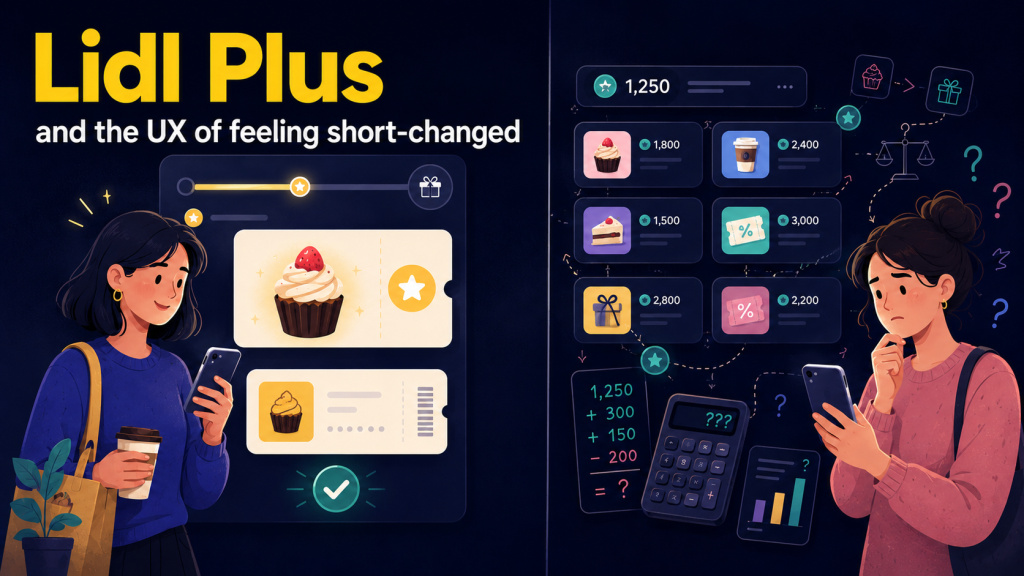
Lidl’s recent loyalty scheme update has caused a significant backlash amongst existing customers.
The new Lidl Plus points system offers more flexibility on paper, allowing customers to redeem their points on a wider variety of items than before, but many are still weighing up whether the new system feels like an improvement.
For us here at Creative CX, the complaints highlight a familiar UX problem with how loyalty schemes are judged – not by their mechanics and functionality alone, but by how rewarding, fair, and easy to understand they feel.
Why the old loyalty scheme felt clearer
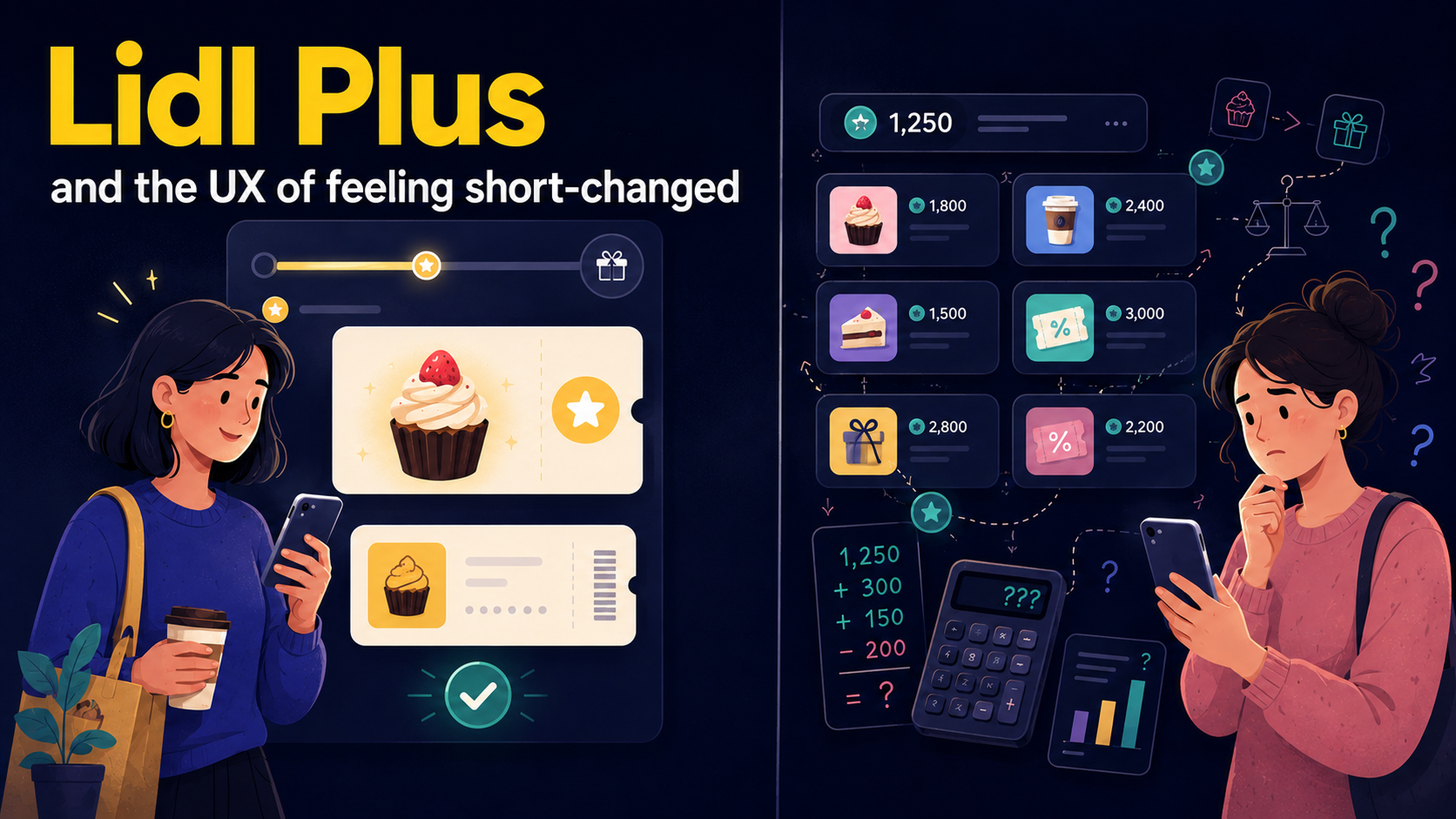
Under the previous “Coupon Plus” scheme, meeting monthly spending milestones unlocked specific rewards.
The clarity provided by visible progress and tangible rewards matters.
A free bakery item after £10 is instantly understandable; the new scheme asks customers to do more work.
They now need to understand how points are earned, what points are worth, and which rewards they should redeem.
On top of all this, many are trying to determine whether the new scheme offers better value than the old one.
The importance of perceived value
Users do not judge the loyalty scheme in isolation, but compare it against what they used to get.
If a reward that once felt easy to get now feels difficult to obtain, it can feel as though something has been taken away.
Therefore, the question is not whether Lidl’s new scheme is objectively generous, but whether it is perceived as such.
Emotional thinking plays a huge role here, as users do not simply think “what am I getting?” but also “am I being treated fairly?”
What Jobs To Be Done loyalty research tells us
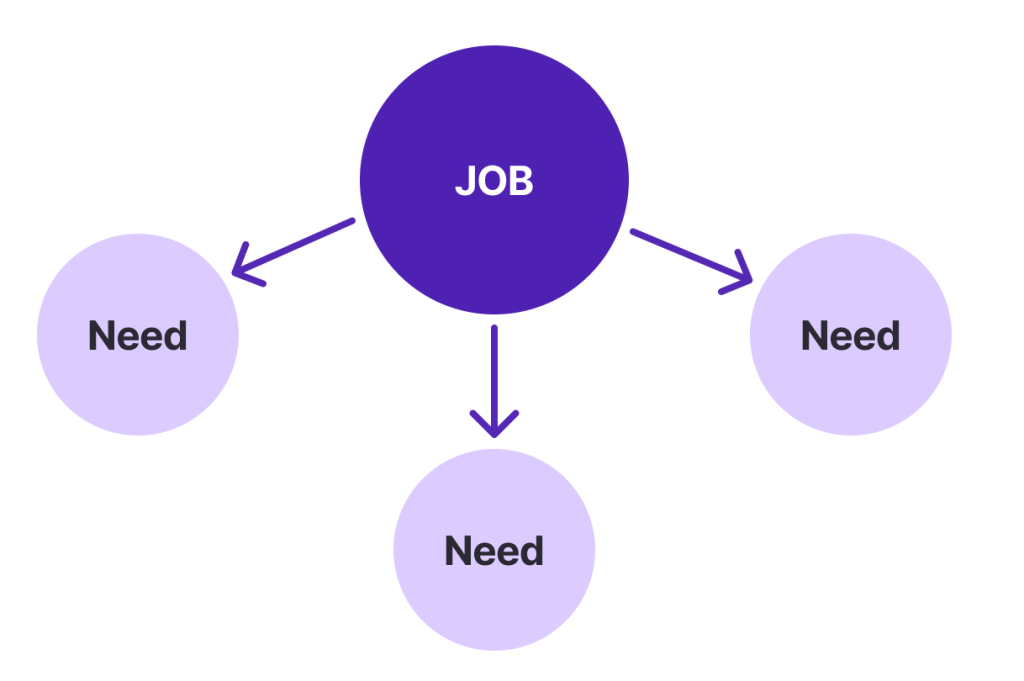
At Creative CX, this is exactly the kind of challenge we have explored through our loyalty research work with Decathlon, among other projects.
In that project, we used Jobs-To-Be-Done research to understand what customers truly needed from this specific loyalty programme, what would make it feel valuable, and where the opportunities were to improve engagement and retention.
The success of a loyalty scheme depends on customers understanding, remembering, trusting, and feeling motivated to use it.
How different shoppers react to change
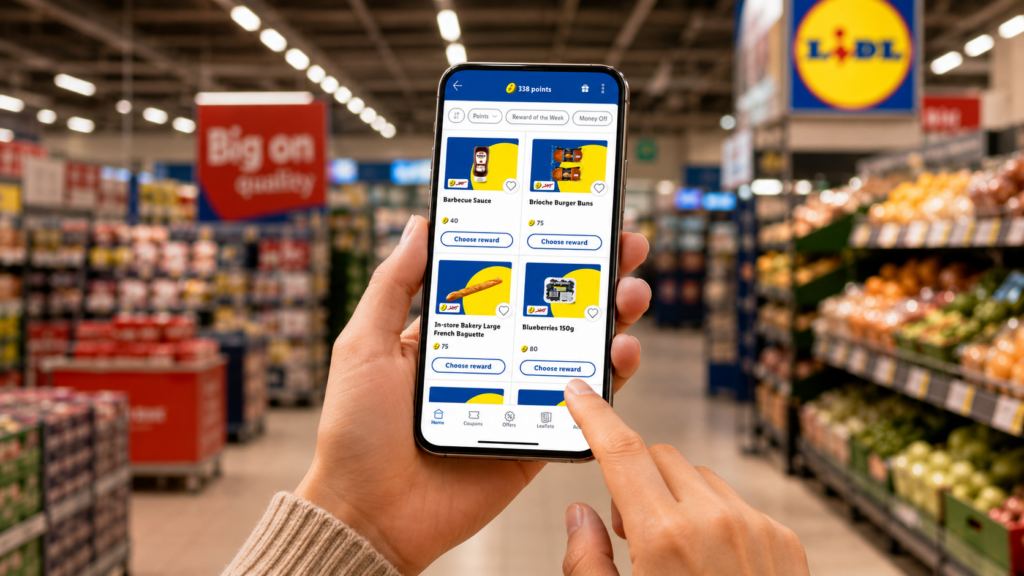
One likely reason why Lidl’s new scheme has divided opinion is that shoppers with different habits will feel the changes in different ways.
Frequent, higher-spend customers may value the ability to save points over time, whereas smaller spenders (such as those in single-person households) or infrequent Lidl shoppers may find rewards harder to reach.
This is an important UX consideration, as a loyalty scheme should not only reward the most commercially valuable behaviours, but also needs to protect goodwill across the wider customer base, especially for a value-led brand.
What brands should test before changing loyalty schemes
The Lidl reaction is a reminder that loyalty changes should be tested as customer experiences, not just financial models.
Before making changes, brands should ask:
- Can customers explain the scheme in one sentence?
- Do the rewards feel attainable?
- Which customer groups feel better or worse off?
- Does flexibility make the scheme feel more valuable, or more confusing?
- Does the change feel like an improvement, or a reduction dressed up as one?
These are UX research questions as much as commercial or business questions.
The takeaway
Lidl’s updated loyalty scheme may offer more choice, but the reaction shows how easily this can be undermined by complexity and perceived loss.
Loyalty schemes need to do more than add up financially; they need to feel simple, fair, rewarding and worth remembering.
Get in touch to discuss how UX research can help you create loyalty experiences that feel valuable, fair, and rewarding to your customers. If you’d like to explore your challenges in more detail, we’d be happy to arrange a free discovery call.