
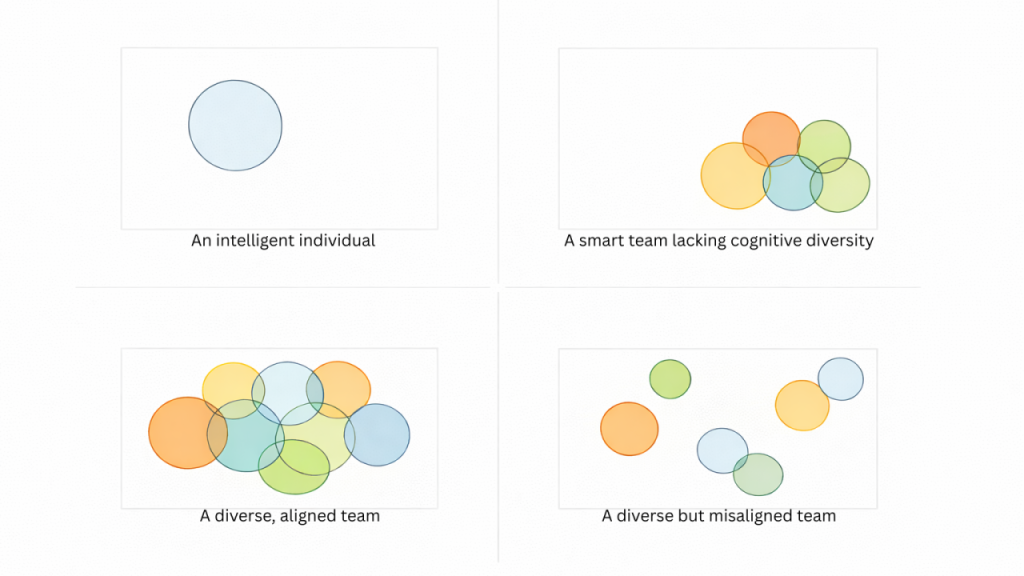
Diversity isn’t just about fairness or representation. It’s about performance.
Over the years, I’ve come to believe that diversity of mind is one of the most important drivers of creativity. And when creativity is applied with purpose, it becomes innovation.
That idea is explored brilliantly in Rebel Ideas by Matthew Syed, which has influenced how I think about teams, collaboration and problem-solving.
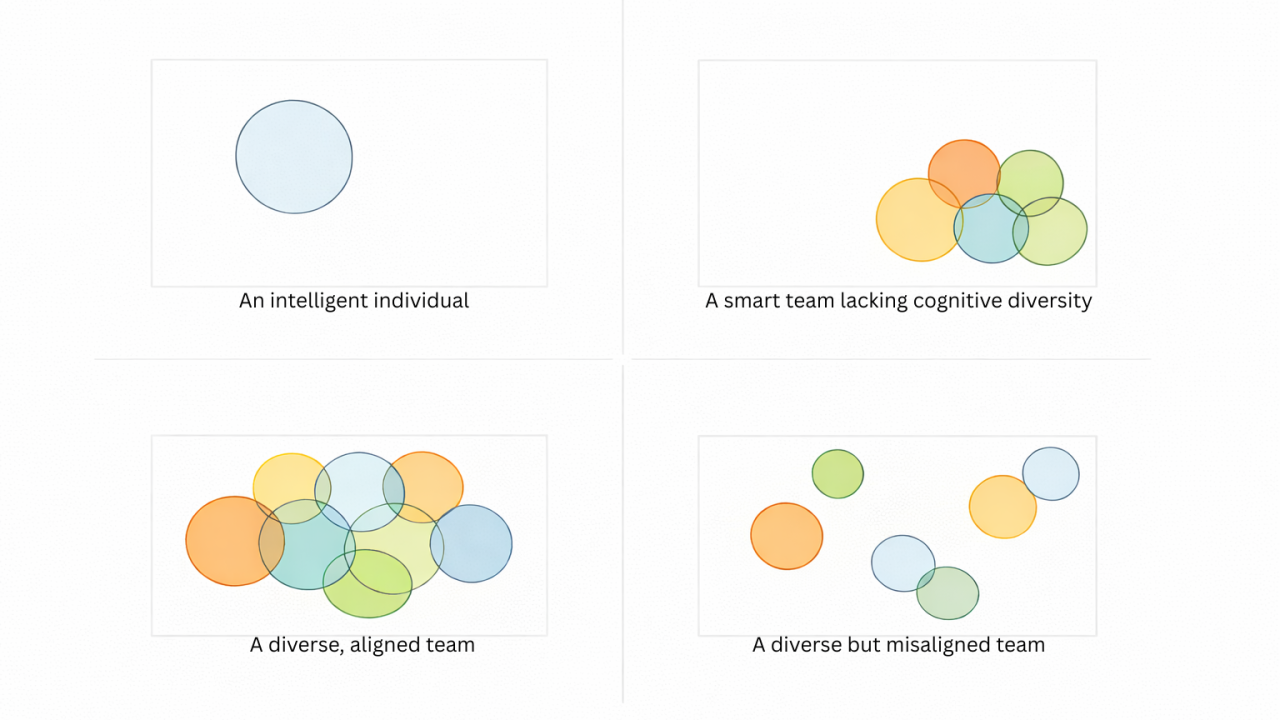
One of the key messages in the book is that intelligence on its own isn’t enough.
If everyone in the room thinks the same way, you’ll keep circling the same answers. But when you bring together people with different backgrounds, experiences and perspectives, that’s when things start to open up.
“… collective intelligence emerges not just from the knowledge of individuals, but also from the differences between them.” – Matthew Syed, Rebel Ideas, p. 65
For me, this isn’t just theory. I’ve seen it play out again and again in practice.
The Conditions for Creative Thinking
There’s a term Syed uses that really stuck with me: recombinant innovation.
It’s the idea that new ideas are often formed by combining existing ones in fresh ways.
Creativity isn’t always about invention. It’s about the combination.
And to create the conditions for that, you need people who think differently.
That’s what made the printing press such a breakthrough.
Gutenberg didn’t invent all its parts from scratch. He combined a wine press, movable type, ink and paper into something new.
It was a leap made possible not by mastery in a single field, but by seeing across them.
When I look back at the most exciting or unexpected solutions I’ve seen come out of workshops, team sessions or client work, they rarely came from the most experienced person in the room.
More often, they came from the outsider. The one who wasn’t weighed down by how things have been done before. The one who asked the naive question or made the strange connection.
None of this works if the problem isn’t well understood.
That means defining the challenge clearly enough that everyone knows what they’re solving, while also being aware of any adjacent areas it might affect.
How Creative CX Puts This into Practice
In larger group activities like workshops and our Experimentation Day events, we’re deliberate about how we structure the teams.
People don’t stay in their usual departments. We mix product managers, designers, engineers, analysts and other specialists across the room.
That’s intentional.
When people from the same team work on a problem together, they often carry the same assumptions. They’ve lived through the same blockers and tend to self-censor, e.g.
- We tried that already
- Legal won’t sign off
- That’s not how we do things here
These are natural responses, but they are limiting. And when everyone shares the same mental constraints, ideas get safer and more predictable.
Bringing in people from different disciplines or backgrounds disrupts that pattern.
Someone in the room won’t know the blocker, or won’t be bound by it. They ask different questions and they see things others don’t.
That’s when the conversation shifts. And that’s usually when better ideas start to surface.
This Isn’t a Surface-Level Commitment
For us, diversity isn’t something to badge or roll out as an initiative.
It’s built into how we work, because the best teams have a bit of friction in them, not the unhelpful kind, but the kind that comes from different perspectives meeting and improving each other.
And we know that innovation is not just a function of talent or time. It is a function of who is doing the thinking and how differently they approach the problem.
We don’t want echo chambers. We want a range.
That applies to how we build our internal teams and how we assemble client teams, too. We don’t just look at capability. We look at mindset. Because that’s where the value is.
Final Thoughts
If you want better solutions, don’t start with ideas. Start by making sure the problem is well understood and clearly framed.
That’s what gives ideas the direction they need to become meaningful.
Then bring together people who see it differently, and give them room to challenge and build on each other’s thinking.
That mix of perspectives is usually where the most interesting solutions start to emerge.