
Decathlon Loyalty Programme Jobs-To-Be-Done Opportunity Discovery Research
Identified 14 core jobs-to-be-done and 58 associated user needs, conducted 24 in-depth interviews and a survey of 1,000 participants, revealed key unmet needs with Decathlon's loyalty programme, and provided a clear roadmap for a more effective loyalty model.
Identifying the Loyalty Disconnect
Decathlon is one of the most recognisable names in European sports retail, known for designing and producing high-quality gear for all kinds of sports, ages, and abilities.
While the brand had an existing loyalty programme in place, it had become increasingly costly to run. With relatively low user engagement, the value it brought to UK customers was unclear.
To strengthen their loyalty offering, Decathlon partnered with Creative CX to explore how customers respond to different loyalty models and benefits, and to identify the most effective ways to improve acquisition and retention.
Understanding Loyalty Through the Lens of Jobs to be Done (JTBD)
To meet Decathlon’s objectives, we decided to use our tailored version of the jobs-to-be-done (JTBD) framework.
This methodology focuses on understanding the underlying needs and desired outcomes customers seek when “hiring” a product or service to accomplish a specific task, shifting the focus from the product itself to the customer’s true objectives and the value they seek.
For instance, users don’t buy electric drills because they want one; they buy them because they want to make a hole in a surface. By focusing on the task the user is trying to complete, it becomes easier to identify all the customer’s needs and determine which ones are unmet.
We began by conducting JTBD interviews with Decathlon customers, exploring all aspects of the loyalty journey, including how they utilise the current programme and their impressions of the brand. We also interviewed non-customers who are loyal to other brands, to learn what makes them feel recognised and rewarded.
In all these interviews, our goal was to understand their expectations and objectives with loyalty programs, as well as to uncover any frustrations or benefits they experienced.
Additionally, we examined how these factors influenced their purchasing behaviour.
For example, we observed that users tend to be far more engaged with loyalty programs from retailers they frequently shop at, while programmes from less-visited retailers were perceived as less valuable.
We found that people engage more with loyalty programmes when they shop with a brand regularly. Supermarkets were a standout example.
Customers can easily track points, earn rewards, and see the real value of their loyalty. Programmes tied to infrequent purchases didn’t have the same impact
After conducting 24 interviews (12 with customers and 12 with non-customers) and analysing them, we identified 14 core jobs-to-be-done (JTBD) that users need to complete when signing up for or using a loyalty programme.
In addition, we identified 58 needs associated with getting these jobs done. These needs are essentially more granular jobs that need to be fulfilled for the core job to be completed.
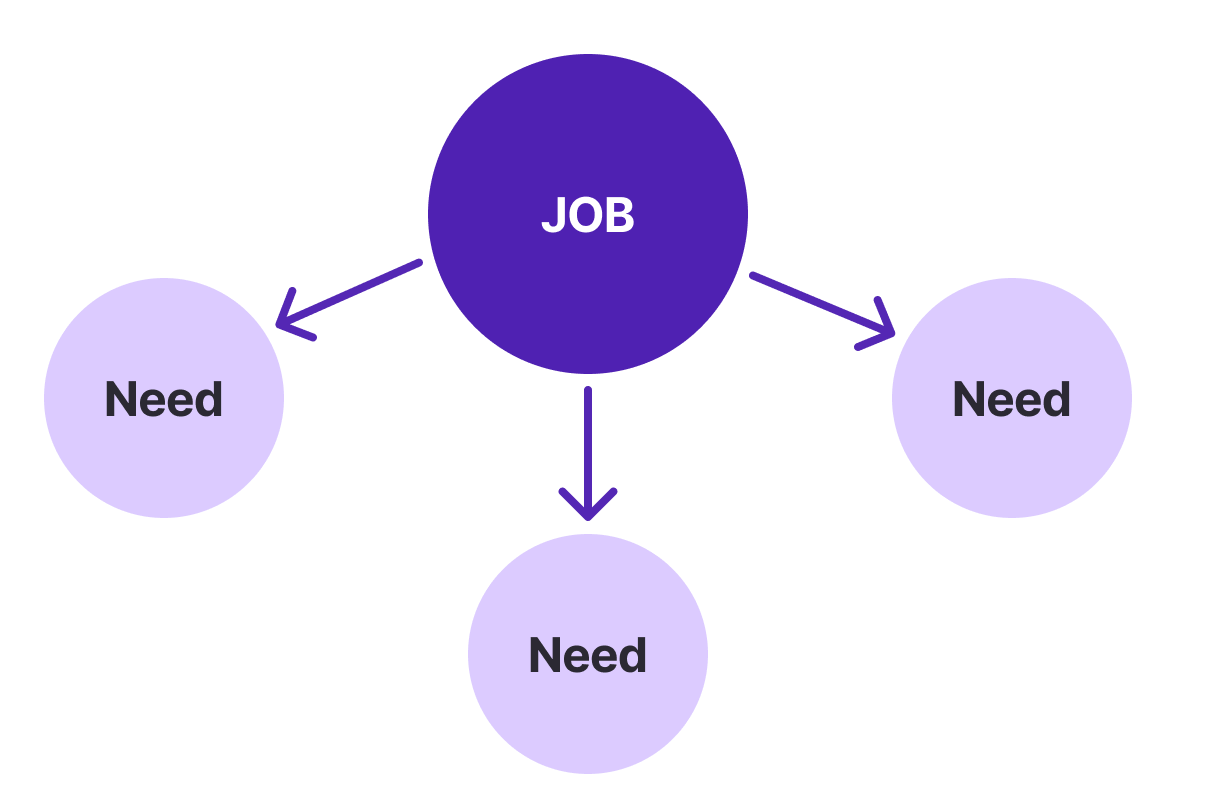
For instance, one of the jobs that came up from this research was: “When I’m a loyalty scheme member, I need to be kept notified of discounts, offers and my membership status. So that I don’t need to be proactive in checking my membership and can avoid missing out on opportunities to save money.”
This job had five needs associated with it, which had to be satisfied for users to complete it:
- I need to be kept informed about new or limited offers
- I need discounts and offers that are relevant to my shopping habits
- I need to be kept up to date on my benefits and how close I am to reaching a goal
- I need to avoid being sent too much correspondence about my loyalty scheme
- I need a convenient means of accessing my loyalty scheme
While the qualitative customer needs and jobs outlined the full scope of expectations, we still required quantitative validation to prioritise and rank these user needs by importance.
To achieve this, we conducted a user needs survey, collecting 1,000 responses from a UK-representative panel over the course of a week
Participants rated the importance of each need, and some of the results were surprising.
For instance, during interviews, several users questioned the fairness of certain loyalty schemes that penalised non-members. However, in the survey, fairness ranked among the least important user needs!
Having these needs ranked by importance provided an objective foundation for decision-making. It helped determine the significance of unmet needs in the market and guided Decathlon in prioritising unsolved customer problems.
Outcomes & Results


This JTBD discovery project highlighted several relevant user needs that could be leveraged to make impactful improvements in the loyalty programme.
Customers overwhelmingly expressed the desire for a more transparent and easy-to-use rewards system, as well as exclusive benefits that made them feel valued.
For Decathlon, the results of this study provided a valuable foundation for redesigning their loyalty programme.
By focusing on the most critical unmet needs, the brand can create a system that is not only cost-effective but also significantly more engaging.
Clear reward structures, personalised discounts, and exclusive experiences, such as early product access or members-only events, could boost both customer retention and acquisition.
Additionally, these insights will enhance Decathlon’s decision-making for any future adjustments to its loyalty program.
By continuously tracking key success metrics such as enrollment rates, redemption rates, and repeat purchase behaviour, Decathlon can ensure ongoing optimisation of its loyalty initiatives.
This data-driven approach will help them build a more loyal customer base and drive long-term business success.
Looking to Improve Your Loyalty Strategy?
We helped Decathlon uncover what really matters to their customers, validate those insights at scale, and lay the groundwork for a loyalty programme that is both engaging for customers and cost-effective for the business.
If you’re looking to rethink your loyalty strategy, better connect research to action, or build customer-centric programmes that actually drive value, book a free discovery call.
Testimonial from Decathlon
“Working with Creative CX on understanding the needs of our customers from our loyalty programme was a highly insightful process. We needed to understand what truly drives loyalty for our customers in the UK.
Their use of the Jobs-to-Be-Done (JTBD) framework was key in uncovering the needs of our customers. The validation of the needs with a survey provided us with an objective, data-driven foundation for decision-making.
The findings have given us a clear, strategic roadmap to redesign our loyalty programme, boosting both customer retention and acquisition, and ensuring we build a more valuable and competitive offering.” – Shilpa Manikanteswaran
Interested in working with Creative CX?