

The way people search for information is changing. Tools like ChatGPT have made it increasingly normal to describe what we want in natural language, with context, detail, and multiple requirements all included in the same request.
From ChatGPT to Google’s AI Overviews, this is how people search now, and that expectation is showing up everywhere, including on e-commerce sites.
Here at Creative CX, we’re always tracking and uncovering trends in UX, user behaviour, and customer expectations, and recently we’ve seen a significant shift in expectations around search, particularly on e-commerce sites.
We’ve had an extremely busy summer carrying out a large number of usability testing studies as part of our Opportunity Audits, including studies for three well-known retailers.
How AI is changing e-commerce search behaviour
The search box is rapidly becoming an “intent” box, and customers are increasingly entering full questions or detailed requirements, expecting this to be interpreted correctly and return a suitable set of results.
What this essentially means is that customers now expect to describe what they’re looking for in plain English, rather than translating their needs into more “machine-readable” language focused on keywords or limiting the detail included so the system can process it.
Adobe’s 2025 retail data found that traffic to retail sites from AI-powered platforms like ChatGPT and Google Gemini has grown more than 1,200% compared to August 2024, and by March 2025, 35% of UK consumers surveyed had already used GenAI tools to help with shopping. AI-assisted search and discovery isn’t an emerging behaviour anymore – it’s rapidly becoming the default one, a pattern Google has also observed in how AI Mode is changing search behaviour.
The gap between what customers expect and what site search delivers
Traditional site search is struggling to keep up. It tends to struggle with more complex queries, especially those combining multiple attributes, synonyms, and natural language.
Baymard’s 2026 research found that 56% of sites still fail to adequately support these query types, even though shoppers still expect the same “uncanny ability” to interpret intent that they get from major web and social search engines.
This means there’s a significant gap between user expectations and reality, and we’ve seen this reflected in our moderated usability testing, with frustrated participants often giving up after struggling with a tool that now feels like it’s working against their needs.
Is AI moving the benchmark?
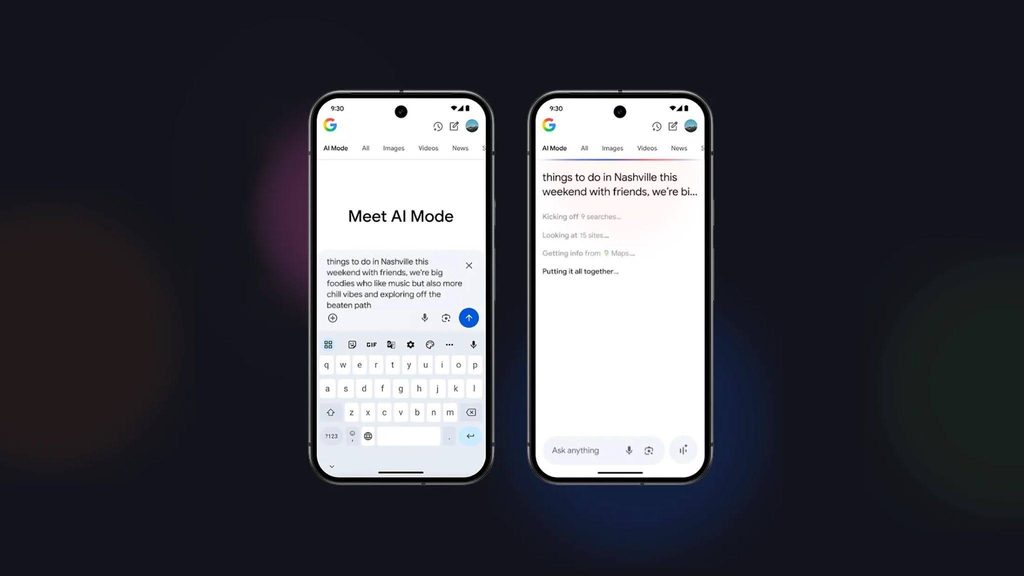
Our hypothesis is that frequent use of ChatGPT and other LLMs is teaching people that systems should understand complex, natural-language requests by default.
That’s echoed by Google’s own account of building AI Mode: Product Management Director Soufi Esmaeilzadeh describes the goal as letting people pose complex questions in plain language, rather than translating their needs into keywords first.
This no longer feels like a feature that’s ahead of the curve: instead, when a system can’t do this, it feels outdated.
How AI is changing product comparison and discovery
We’re also seeing people completely give up on websites for product discovery or comparison when product information is hard to find or not immediately surfaced. We’ve often seen people pasting links, or screenshotting and dropping entire pages into an LLM, and asking it to do the comparison work for them.
The risk here is that once people have moved their research off the website, they’re also more likely to look elsewhere for the same or similar products, something we’ve observed frequently.
Why “good enough” search UX doesn’t stay good enough
Good UX has a half-life, and a solution doesn’t have to get worse to become a worse experience.
User behaviour and expectations change over time, so something that worked perfectly last year is unlikely to be the best option today.
Search is a particularly visible example right now, but the same principle applies everywhere – UX is a moving target and requires ongoing attention.
Continual UX research matters more than ever
This is why we advocate for Continuous Discovery Research, including testing with real people.
Alongside other research methods, this is vital for getting a clear understanding of genuine customers and their needs, and for informing decision-making and prioritisation.
The takeaway
The way customers search is changing, and businesses need to pay attention to the expectations being set by the tools people now use every day.
ChatGPT and other LLMs may be contributing to a broader shift in which customers expect every system to understand complex, natural-language requests, interpret their intent correctly, and help them get to what they need without having to adapt their own behaviour to suit the technology.
Search UX that doesn’t meet that bar isn’t neutral; it’s actively pushing customers towards competitors, or toward an LLM that will do the comparison shopping for them instead. If your site search hasn’t been tested against real user behaviour recently, there’s a good chance it’s already behind where your customers’ expectations have moved to.
Get in touch to discuss how UX research can help you close the gap between what your search delivers and what your customers now expect.
If you’d like to explore your challenges in more detail, we’d be happy to arrange a free discovery call.